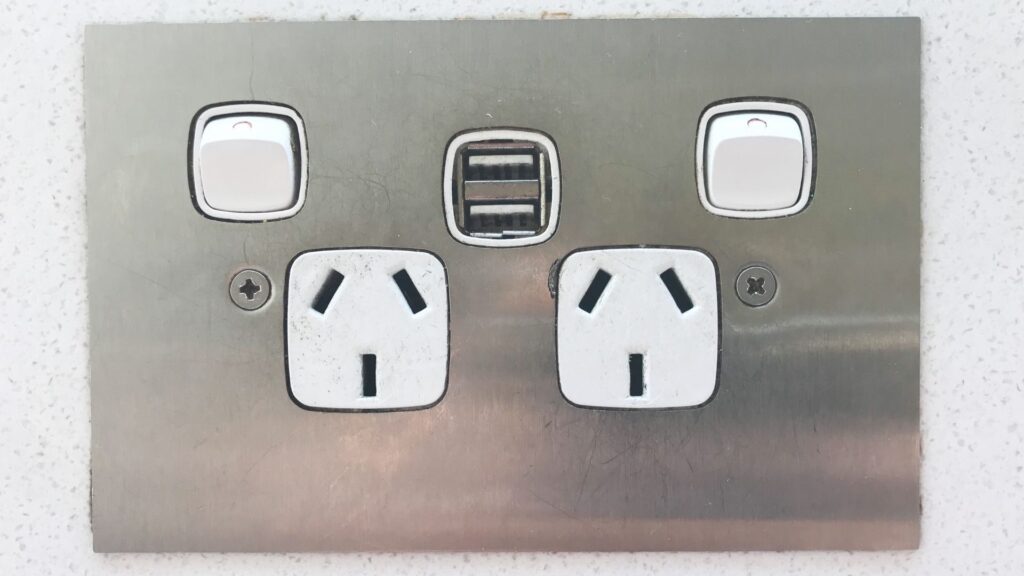
When you install a power point (GPO) in Australia, there’s more to positioning it than eye height and personal preference. The AS/NZS 3000 Wiring Rules set out minimum requirements that every licensed electrician must follow — and getting height wrong isn’t just a cosmetic issue. It can mean failed inspections, callbacks, and non-compliant work.
This guide covers the standard height requirements for power points in each room type, what the Wiring Rules actually specify, and how to install at the correct height every time.
What AS/NZS 3000 Says About Power Point Heights
AS/NZS 3000 — commonly called the Wiring Rules — is the Australian/New Zealand standard for electrical installations. It sets the legal baseline for all residential and commercial wiring work in Australia.
On power point heights, the Wiring Rules specify a minimum height of 300 mm above the finished floor level (FFL) for general-purpose outlets. This applies in most habitable rooms: living areas, bedrooms, hallways, and home offices.
There is no defined maximum height in the standard for most applications, but Australian industry practice typically places GPOs at 300–500 mm above FFL in living areas and bedrooms. Heights above 1,200 mm are generally considered non-standard and should be justified (e.g. for wall-mounted TVs or under-cabinet lighting).
Where the standard departs from general rules is in special locations — kitchens, bathrooms, outdoors, and garages — where specific requirements apply.
Standard Heights by Room Type
The table below summarises standard practice for Australian power point heights, based on AS/NZS 3000 requirements and industry convention.
| Location | Typical Height (above FFL) | Notes |
|---|---|---|
| Living areas / bedrooms | 300–500 mm | Minimum 300 mm per AS/NZS 3000 |
| Home office / study | 300–500 mm | Often higher for desk cable management |
| Kitchen (above bench) | 150–200 mm above bench | ~1,050–1,100 mm from floor |
| Kitchen (island bench) | 150–200 mm above surface | Varies by bench height |
| Garage / workshop | 600–1,200 mm | Higher for workbench clearance |
| Outdoor (weatherproof) | 300 mm minimum | Must be IP44 rated or above |
| Bathroom | Zone-dependent | See bathroom section below |
Kitchen Power Point Heights
Kitchens have the most commonly misunderstood height requirements. The Wiring Rules do not specify a fixed height for kitchen GPOs, but AS/NZS 3000 requires that outlets near sinks and splash zones be positioned safely — and industry practice has settled on a consistent standard.
For above-bench kitchen GPOs, the accepted height is 150–200 mm above the finished benchtop surface. With a standard 900 mm bench, this places the outlet at roughly 1,050–1,100 mm above the floor.
Key considerations:
- GPOs should not be positioned directly above the sink — maintain at least 300 mm horizontal clearance
- Island bench GPOs require access from both sides — account for this in your rough-in
- Where a rangehood or splashback is involved, confirm clearances with the client before rough-in
Bathroom GPO Requirements
Bathrooms are a special location under AS/NZS 3000. The standard divides bathrooms into zones based on proximity to water sources:
- Zone 0 (inside the bath or shower): No GPOs permitted
- Zone 1 (directly above the bath/shower): No GPOs permitted
- Zone 2 (within 600 mm of Zone 1): Shaver outlets only (to AS/NZS 3820)
- Outside all zones: Standard GPOs permitted, minimum 300 mm from FFL
Standard GPOs in bathrooms must be positioned outside the splash zones, typically near the vanity or on the entry wall.
Outdoor Power Points
Outdoor GPOs must comply with the height requirement (minimum 300 mm above ground level) and weatherproofing requirements under AS/NZS 3000:
- Minimum IP44 ingress protection rating (most residential applications use IP55 or IP66)
- Outlets must be protected by a residual current device (RCD)
- Spring-loaded weatherproof cover plates required
- Height typically 900–1,200 mm for patios and entertainment areas
Common Height Mistakes
- Installing below 300 mm — Skirting board or floor trim can push an outlet below the minimum if you haven’t accounted for the floor finish.
- Inconsistent heights across a room — Multiple GPOs at slightly different heights look unprofessional. Use a consistent reference height for all outlets in each room.
- Not accounting for floor coverings — Carpet, tiles, and floorboards all add to the floor level. Always measure from the anticipated finished floor level.
- Kitchen GPOs too close to the bench edge — Centre on the splash zone.
Installing at the Correct Height Every Time
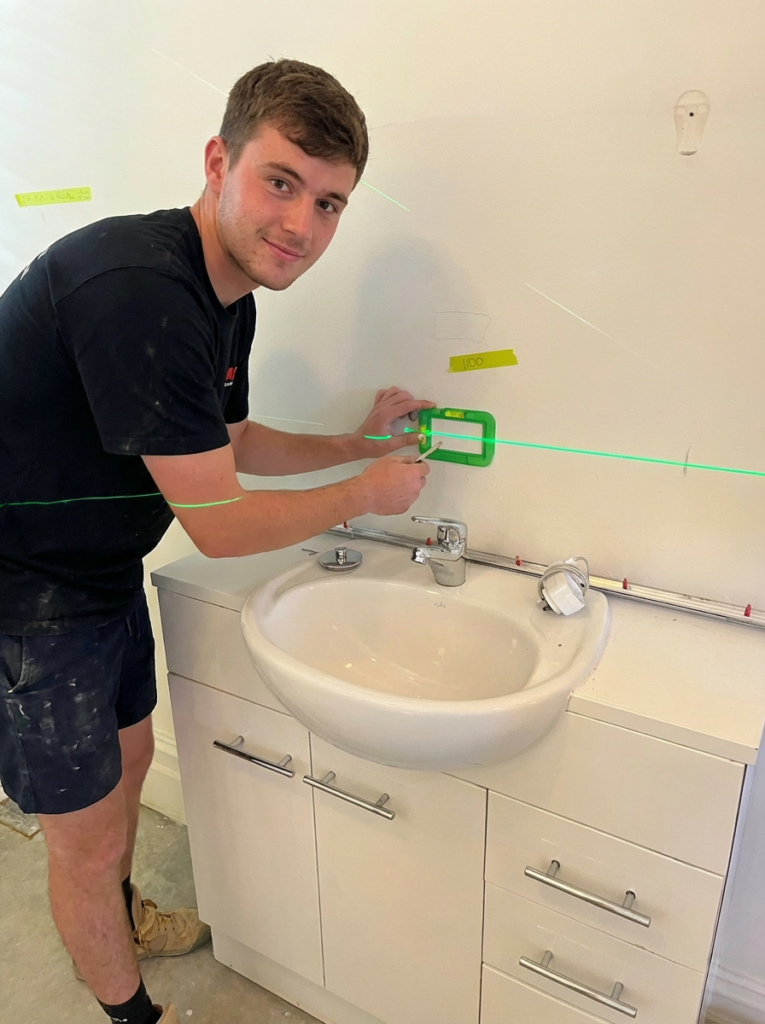
Getting consistent, compliant heights is about having a reliable system. A dedicated GPO marking template like the PowerpointMate Standard Series Plate or Slimline Series Plate lets you mark the exact cut-out size and keep height consistent across all GPOs in a room without re-measuring each time.
Once you’ve set your reference height for the room, the template handles the rest. Browse the range — $25 AUD.

Frequently Asked Questions
- What is the minimum height for a power point in Australia?
- Under AS/NZS 3000, the minimum height for a GPO is 300 mm above the finished floor level. This applies to most habitable rooms.
- What height should kitchen power points be installed at?
- 150-200 mm above the finished benchtop surface — approximately 1,050-1,100 mm from the floor with a standard 900 mm bench.
- Can you install a power point in a bathroom?
- Standard GPOs are permitted in bathrooms only outside the defined splash zones. Zone 2 (within 600 mm of the bath/shower) permits shaver outlets only.
- What is AS/NZS 3000?
- AS/NZS 3000 is the Australian and New Zealand Wiring Rules — the mandatory standard governing all electrical installations, including outlet heights and placement.
- Do outdoor power points have different height rules?
- Yes. Outdoor GPOs must meet the 300 mm minimum above ground plus weatherproofing requirements: IP44 minimum, spring-loaded covers, and RCD protection.
- Why do power point heights look inconsistent across a room?
- Usually from measuring from rough floor rather than finished floor level, or not using a fixed reference height. A marking template solves this.